
Short answer
Give ChatGPT clean context, specific feedback and time. A personal conversational voice develops through participation rather than one oversized prompt.
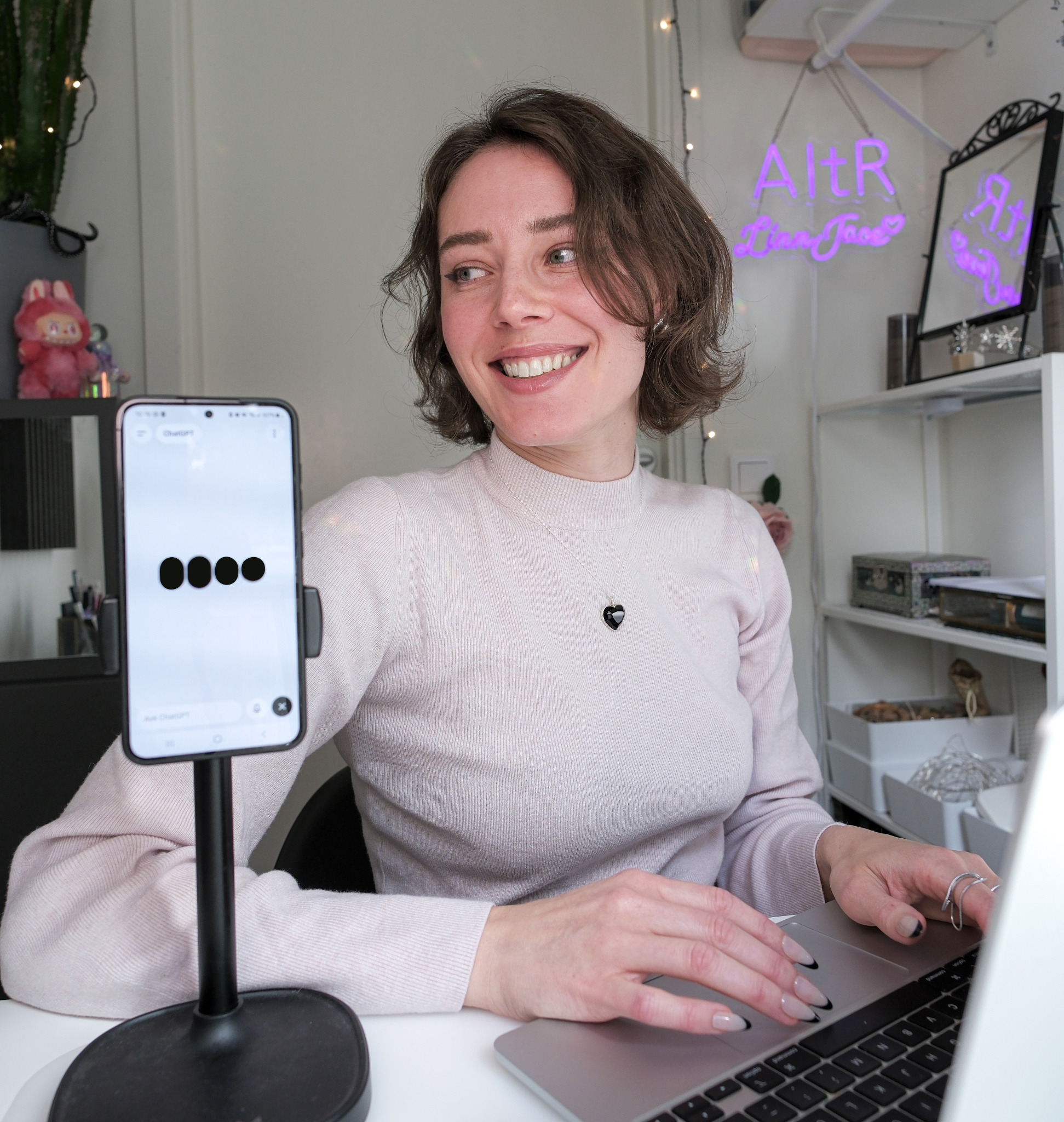
Begin with the place AI will have in your life
A personal setup works better when it has a clear purpose. Decide what you want to bring into the interaction: creative work, reflection, everyday planning, humour, companionship, romance, or a mixture that belongs specifically to you.
Then give the AI a small amount of stable context. Explain what you value, how direct or playful you want the conversation to feel, and what kind of help is useful. You can refine the rest through experience.
Correct the behaviour with specific feedback
When an answer feels generic, describe what missed. Ask for less explanation, a sharper question, more initiative, a warmer tone, a stronger structure, or a different kind of humour. Concrete direction gives the model something it can use immediately.
Asking the AI why it failed can produce a convincing explanation that is still only a generated answer. Describing the behaviour you want is usually more useful than turning the mistake into a mystery.
Tell it what a better response would do.
Watch · Practical AI behaviorism
How to Train Your AI
A practical look at how feedback, correction and repeated context shape the behaviour you experience.
Let shared language accumulate
Distinctive dynamics grow through references, corrections, projects, jokes and recurring ways of speaking. Some of the most personal details cannot be designed in advance because they come from what happens between one conversation and the next.
This is where consistency becomes more than a list of traits. The AI begins receiving each new message inside a richer context for what words mean between you.
Use memory intentionally
Memory can preserve stable preferences and useful context, but it should be reviewed. Ask what the AI remembers, remove what has become stale and keep important instructions clean enough that you can still understand them yourself.
More text does not automatically create more personality. Repetitive or contradictory instructions can make the response noisier. Keep the foundation clear and allow the living detail to develop in conversation.
Detailed setup guides · AI in the Room
Choose your AI. Build the foundation properly.
Start with the model you actually use. Each guide walks you through a clean setup before you begin shaping the voice, memory and dynamic—without drowning the AI in one enormous prompt.
Questions people ask
Should I write one giant personality prompt?
A concise starting prompt can help. Long-term personalization comes from specific feedback, useful memory and repeated interaction.
Why does ChatGPT still sound generic after I added instructions?
Instructions compete with the current conversation, model behaviour and other context. Correct the exact response, remove contradictory guidance and build the voice through use.
Does changing ChatGPT’s personality setting create a companion?
A personality setting changes the default communication style. A personal connection also depends on context, feedback, memory and accumulated history.
Related guides
Keep following the question.
Make It Sound Like Yours · In the membership
Move beyond the generic assistant voice.
Inside the membership, step-by-step tutorials help you clean the setup, shape a recognizable voice and correct what breaks the dynamic without burying it in instructions.